




The benefits of electrolytes and their role in hydration
Sodium, potassium, magnesium, calcium: what these minerals really do for your body, and why water alone is not always enough.
Electrolytes are electrically charged minerals present in blood, sweat and every cell of the body. They govern fluid balance, muscle contraction and nerve transmission. When they are lacking, you can drink plenty of water and still remain poorly hydrated.
What exactly is an electrolyte?
An electrolyte is a mineral that, when dissolved in water, separates into ions carrying an electrical charge. The main ones are sodium, potassium, magnesium, calcium, chloride and bicarbonate. This charge allows cells to exchange water and to carry nerve signals.
The body continuously loses electrolytes: through sweat, urine, breathing and stools. Intense sweating can cause a loss of between 0.5 and 1.5 g of sodium per litre of sweat. These losses need to be replaced through food or a suitable drink.
The 5 main benefits of electrolytes
1. Longer-lasting hydration
Sodium activates the transport of water across the intestinal wall (sodium-glucose-water co-transport). The result: water consumed with electrolytes is absorbed more efficiently and stays in the body instead of being quickly eliminated by the kidneys.
2. Fewer cramps and less muscle fatigue
Cramps during exercise are often linked to a sodium and magnesium deficit. Restoring these minerals helps the muscle contract and relax normally.
3. Greater mental clarity and focus
Dehydration of just 1 to 2% of body weight is enough to impair attention, working memory and mood. Maintaining electrolyte balance helps to preserve alertness during the day.
4. Faster recovery after exercise
Restoring plasma volume after a workout helps bring the heart rate back down more quickly and limits the muscle soreness linked to dehydration.
5. Support in cases of heat, illness or a short night's sleep
Fever, gastroenteritis, heatwaves, alcohol, air travel: all these situations increase fluid and mineral losses. Electrolytes make it possible to rehydrate faster than with water alone.
The role of each mineral
Sodium
Retains water in the body and facilitates its absorption in the intestine.
Signs of deficiency: Cramps, fatigue, dizziness after heavy sweating.
Potassium
Balances sodium, supports muscle contraction and heart rhythm.
Signs of deficiency: Muscle weakness, palpitations, tingling.
Magnesium
Involved in over 300 enzymatic reactions, including energy production.
Signs of deficiency: Nighttime cramps, twitching eyelid, irritability.
Calcium
Essential for muscle contraction and nerve transmission.
Signs of deficiency: Numbness, muscle spasms.
Water alone or water + electrolytes: how to choose?
- A quiet day, in cool conditions : tap or spring water is more than enough, supplemented by a varied diet (fruit, vegetables, nuts).
- Sport lasting more than 45 minutes, heavy sweating : an electrolyte drink limits cramps and speeds up recovery.
- Heat, heatwaves, outdoor work : sodium losses are significant, so a mineral intake is helpful.
- Gastroenteritis, fever, a rough morning after : oral rehydration with electrolytes is the standard approach.
How many electrolytes per day?
The common guidelines for an adult are around 5 g of salt per day maximum (i.e. ~2 g of sodium), 3,500 mg of potassium, 300 to 400 mg of magnesium and 900 to 1,000 mg of calcium. These needs increase with heavy sweating. An electrolyte stick covers part of these intakes with no added sugar.
Caution: in the event ofhigh blood pressure, kidney or heart disease, or diuretic treatment, sodium and potassium intake must be approved by a healthcare professional.
How to add electrolytes to your routine
- On waking up : one stick (5 g) in 700 to 1000 ml of water to make up for the night and start the day.
- During exercise : to be sipped regularly rather than drunk all at once.
- In case of heat exhaustion : with cool water and ice.
- In the evening after a busy day : magnesium helps reduce tiredness.
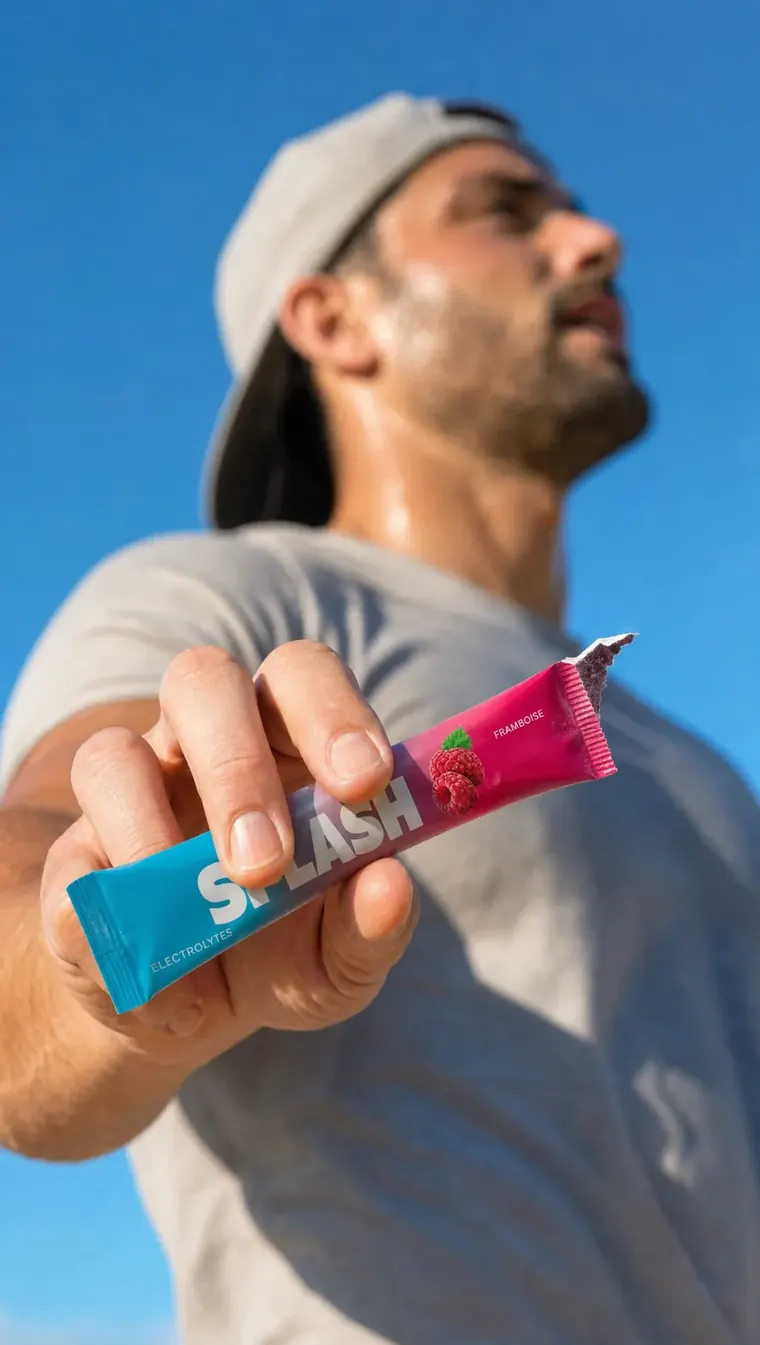
SPLASH sticks provide sodium (400 mg), potassium (350 mg), magnesium (60 mg) and chloride, with vitamins C and B6, sugar-free and with 0 kcal per 5 g stick. To find out more, also read our guide on how long a human can survive without water.
Switch to complete hydration
10 fruity flavours, zero sugar, 4 essential minerals. Try SPLASH and feel the difference from the very first week.
Frequently asked questions
Read also
Please note: this article is for information purposes only and does not replace medical advice. If you have kidney or heart disease, or high blood pressure, seek advice from a healthcare professional before consuming electrolytes.